The apothecary · A to Z
Herbs & apothecary
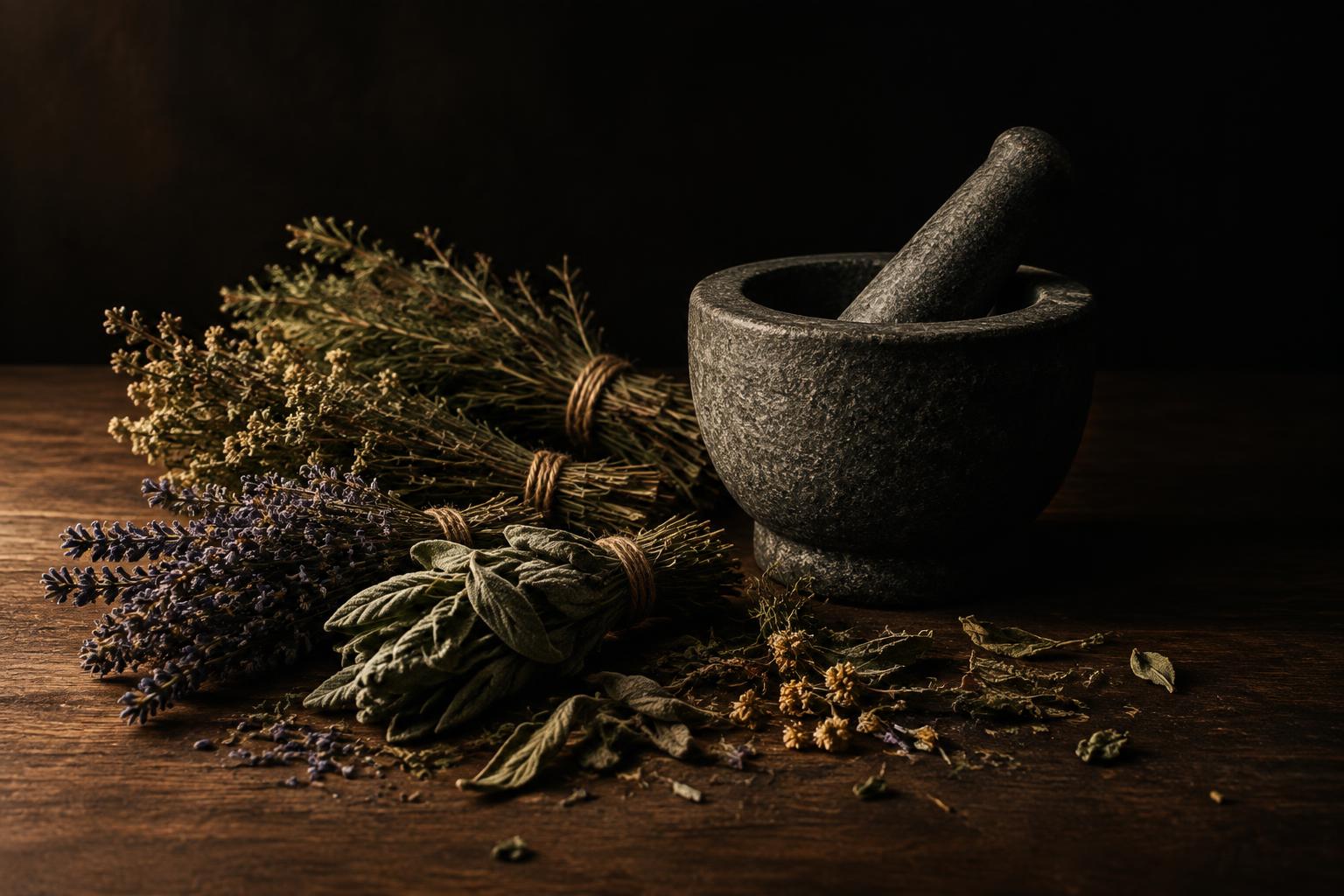
This is the shelf we work from. Every herb we keep is listed here alphabetically, with the plant’s Latin name, what it does to the body, what it has long been used for in working, and the honest account of what it should not be used with.
We sell the Western herbs we were raised on, the Midwestern herbs that grew along the hedgerows and in the bottoms — red clover, boneset, Joe-Pye weed, sassafras, corn silk, goldenseal, black cohosh — and the Asian herbs that came with them: ashwagandha, astragalus, codonopsis, dong quai, goji, schisandra, kudzu, he shou wu and the rest. Every one is cut and dried in small batches.
Prices are by the ounce unless the entry says otherwise, and they follow the current market. If a herb is scarce this season, we will tell you rather than substitute quietly.
How to read an entry
Two accounts of every plant
Each herb is written about twice, and both are kept separate on purpose. The physical account is what the plant does to a body — astringent, bitter, warming, soothing, thinning of the blood. The metaphysical account is what it has been used for in working: what it draws, what it turns aside, what it steadies.
We do not ask you to accept the second on faith. We simply will not pretend the first account is the only one anyone has ever kept.
- Physical properties
- What the plant does — the action on the body, plainly stated.
- Metaphysical properties
- What the plant is for in practice and in working.
- Beneficial & harmful effects
- Where it helps, and where it must not be used.
- Preparation
- Whether it wants an infusion, a decoction, an oil or a poultice.
- Origin & unit
- Where we source it, and the size of the package you receive.
A to Z
The full list
Listed A to Z, grouped by letter. Tap a letter to jump, or search by common or Latin name.
Methods
How a herb is taken
The same plant prepared two ways is two different medicines. These are the six preparations we teach, and the ones the notes on each entry refer to.
Infusion
A tea. Leaf and flower, steeped covered for ten to fifteen minutes so the aromatic oils stay in the cup instead of the ceiling.
Decoction
A simmer. Roots, barks and seeds, which need heat and time to give up what they hold — twenty to forty minutes, then strain.
Tincture
A menstrum. Herb steeped in alcohol for four to six weeks, pressed and bottled, taken by the dropper.
Infused oil
Herb and a light oil, warmed gently for hours, strained and kept dark. For the skin, for dressing a candle, for anointing.
Poultice
The fresh or softened herb held against the body under cloth. The oldest of the preparations, and still the most direct.
Smoke & floor wash
A bundle, a powder, or a strong infusion used on the air and the floor of a room rather than on the body.
A word of sense. Nothing on this page is a prescription, and no herb is safe for everyone. If you are pregnant, nursing, taking any medication, or managing a condition, speak to your own practitioner before you take anything — ours included.
A plant is only half of it. The method is taught next door.